



Battery systems are the backbone of modern marine electrical infrastructure, powering everything from engine starting and navigation to communications, safety systems, and onboard comfort. As vessels become more dependent on these systems, accurate and real-time boat battery monitoring has evolved from a benefit into a key requirement.
A boat’s battery bank is often described as its “electrical fuel tank.” Just as no boater would leave port without knowing fuel levels, understanding battery state is just as important.
Why is Boat Battery Monitoring Important?
1. Reliable Boat Operation
Proper battery monitoring is essential, as electrical power supports essential systems on the boat. An empty battery bank at sea can lead to engine start failure, loss of navigation systems, etc. For example, running lighting and other devices overnight can leave insufficient power to start the engine the next morning. Most boats have a battery dedicated to engine starting and a separate domestic battery bank but even so, forgetting to change the switch position can cause havoc. Batteries also don’t like being fully discharged.
Modern monitoring systems can provide real-time data on voltage, current, and state of charge, helping avoid unexpected outages.
2. Energy Management and Efficiency
Battery monitoring allows you to understand and manage your energy consumption effectively. By tracking battery status, charge and discharge currents, and overall usage, you can see which devices consume power and whether charging sources are sufficient.
This improves efficiency and extends battery life. As an example, relying on solar power during the day instead of running the engine reduces fuel consumption, and avoiding deep discharges helps preserve battery health and reduce costs.
3. Predictive Maintenance
Most of modern battery monitoring systems not only show current status but also help detect problems early. By tracking charge cycles, capacity, voltage, and temperature over time, it becomes easier to identify abnormal behaviour.
For example, a battery holding less charge or taking longer to recharge may indicate ageing or a upcoming issue. Acting early helps you prevent failures and maintenance costs. A Battery Management System (BMS) can also improve safety by protecting against overcharge, deep discharge and overheating.
How has Boat Battery Monitoring evolved?
Historically, boaters relied on simple voltmeters and manual checks. While useful, voltage alone provides limited information – it fluctuates with load and does not accurately indicate remaining battery capacity- and is unreliable for modern lithium batteries.
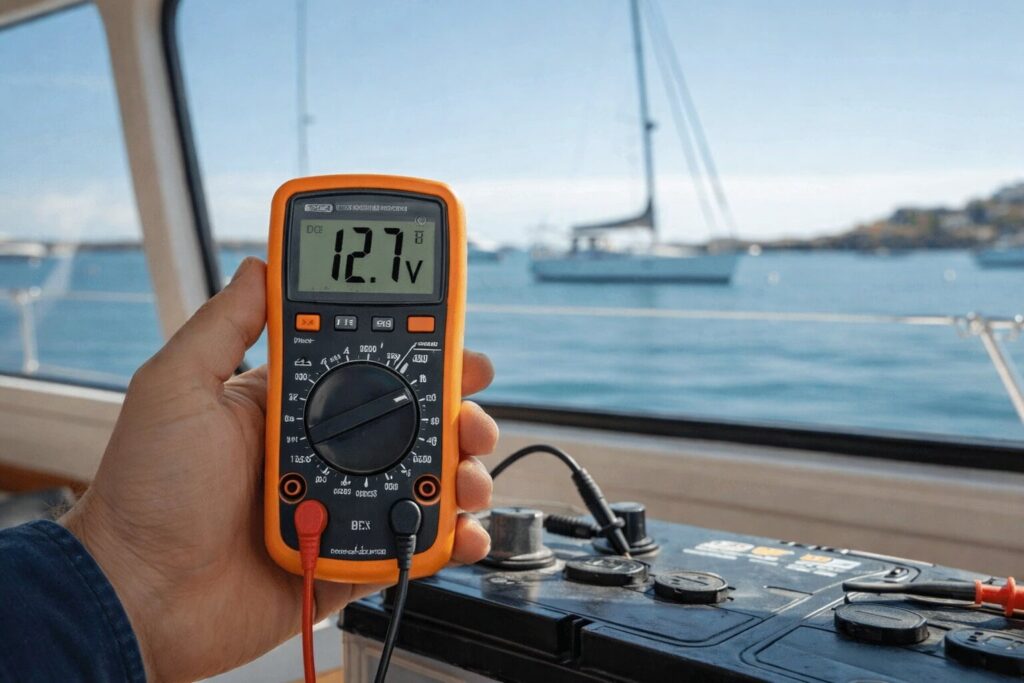
As onboard electrical systems became more complex, these methods become inadequate for reliable and efficient energy management.
Today, advances in technology, connectivity, and battery chemistry (particularly lithium) have transformed battery monitoring into an intelligent, connected, and user-friendly system.
How to monitor a battery bank on a sailing boat or motor boat
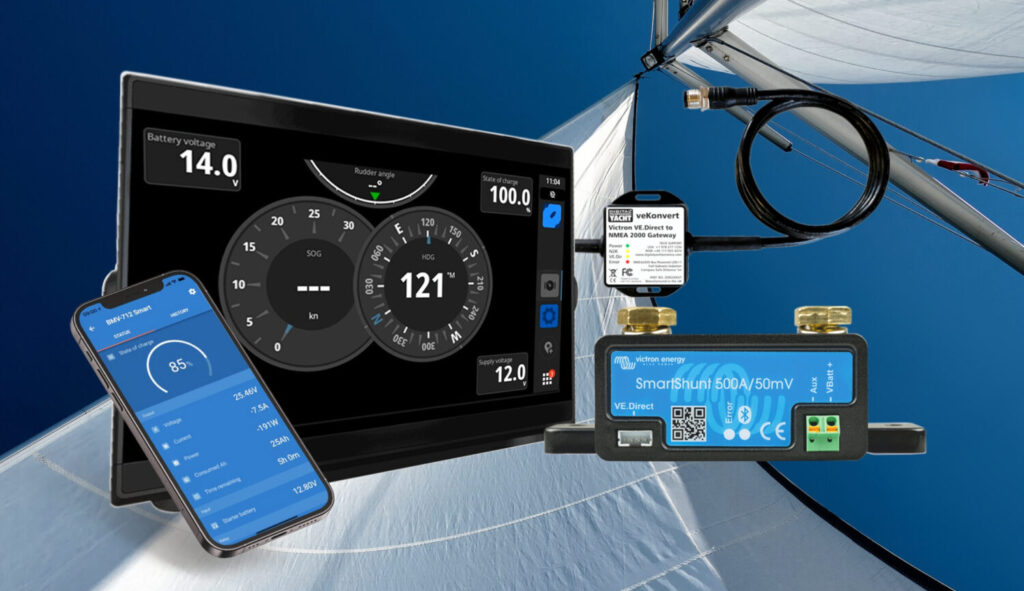
Modern boat battery monitoring systems provide accurate voltage and current data, calculate state of charge and present this information in a simple and easy to understand way. Data can be displayed on a dedicated battery monitor, a multifunction display (MFD) or a mobile device.
Most modern setups use a shunt-based monitoring system, which measures all current flowing in and out of the battery. The shunt typically fits in the negative power line (low side) close to the battery.
BM100 – Boat Battery Monitoring with NMEA 2000
Systems like the BM100 boat battery monitor combine precise shunt measurement with intelligent internal algorithms to deliver accurate battery data. It provides real-time information on voltage, current, and battery capacity, while also recording historical data such as charge cycles and deepest discharge.
The included Victron SmartShunt features Bluetooth connectivity, allowing battery data to be displayed via the Victron app directly on your phone.
Battery data can also be integrated into your boat’s NMEA 2000 navigation system through the supplied veKonvert interface. This means battery health and status is available on your multi function display
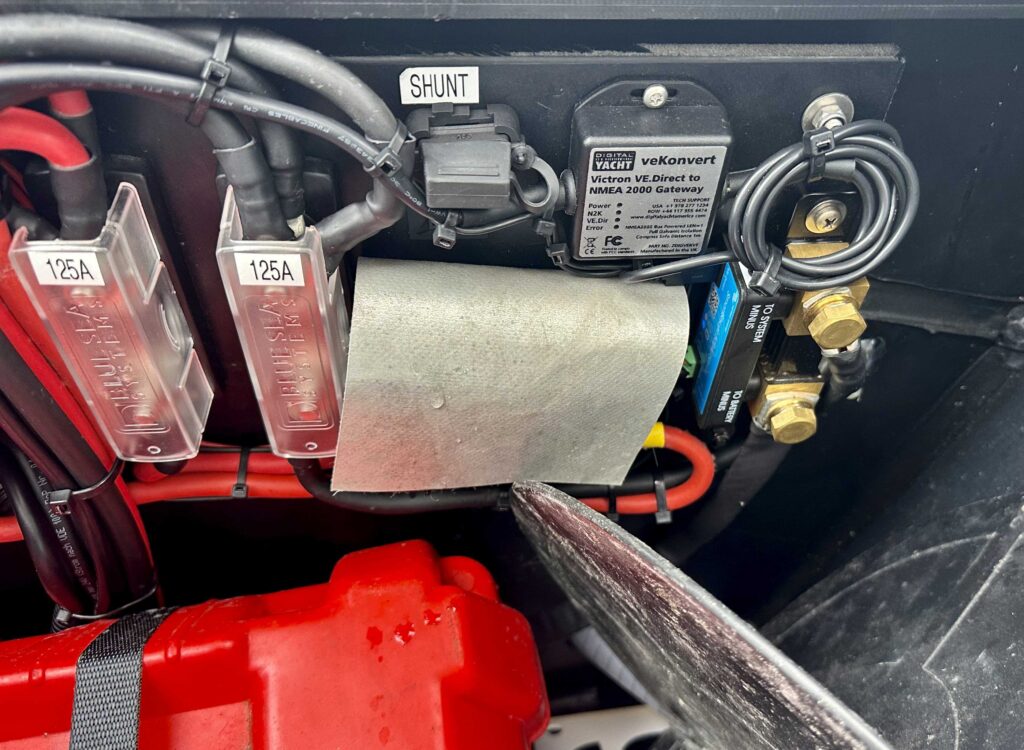
For users who already have a Victron shunt installed, veKonvert is also available as a standalone product.
veKonvert – Connect Victron Energy to NMEA 2000
veKonvert acts as a gateway between the shunt and the vessel’s NMEA 2000 network, allowing battery data to be displayed on chartplotters and multifunction displays. You can then monitor the battery from any chartplotter on the NMEA 2000 network (Raymarine, Garmin, Furuno, Simrad, B&G, etc.)
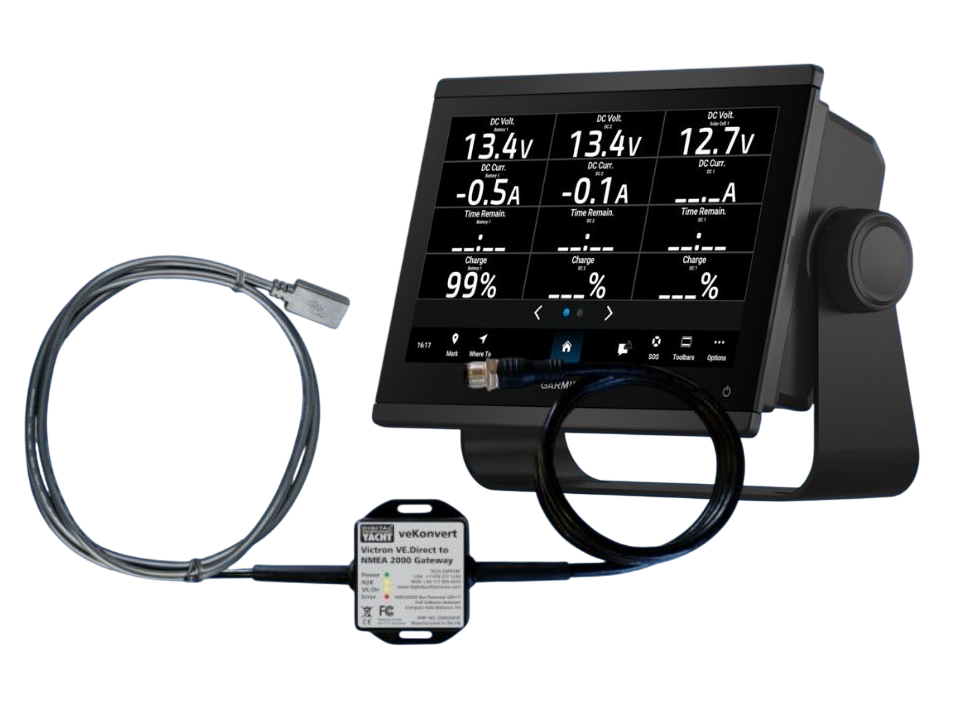
veKonvert supports not only shunts, but also MPPT solar controllers and BMV monitors, providing a complete view of the boat’s energy system, including solar charging.
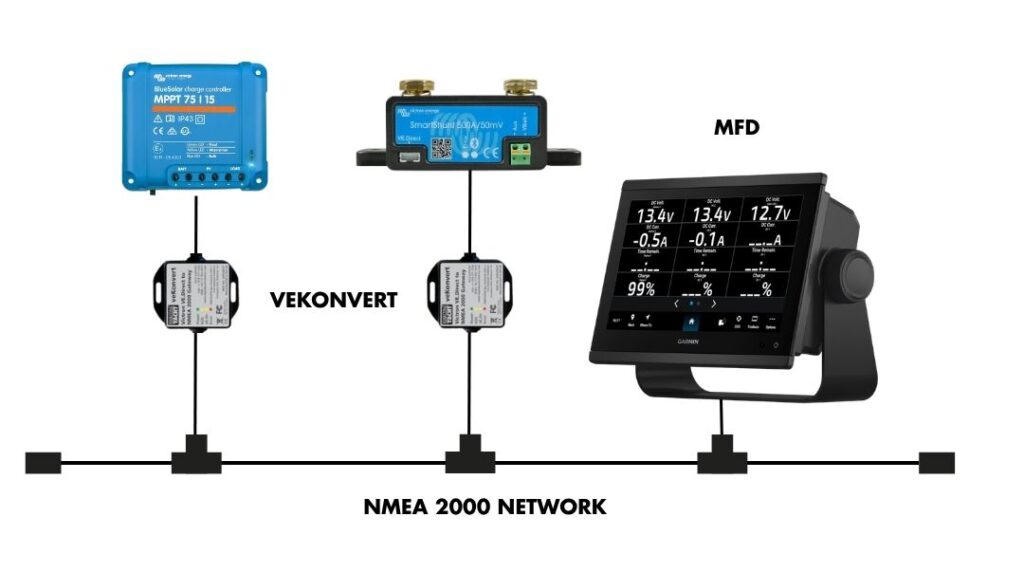
But what if you want to connect several Victron devices, especially if they are located in different areas of the boat or where extending the NMEA 2000 network is not practical? In this case, it is important to note that wireless gateway solutions are available.
veLink – Wireless Victron NMEA 2000 Connectivity
veLink is a Bluetooth interface that wirelessly connects compatible Victron devices to the NMEA 2000 network. Instead of using cables, it collects data from Victron products via Bluetooth wireless and transmits it to the onboard network for display on MFDs.
This simplifies installation, especially when devices are spread across the boat or where adding cables is difficult.
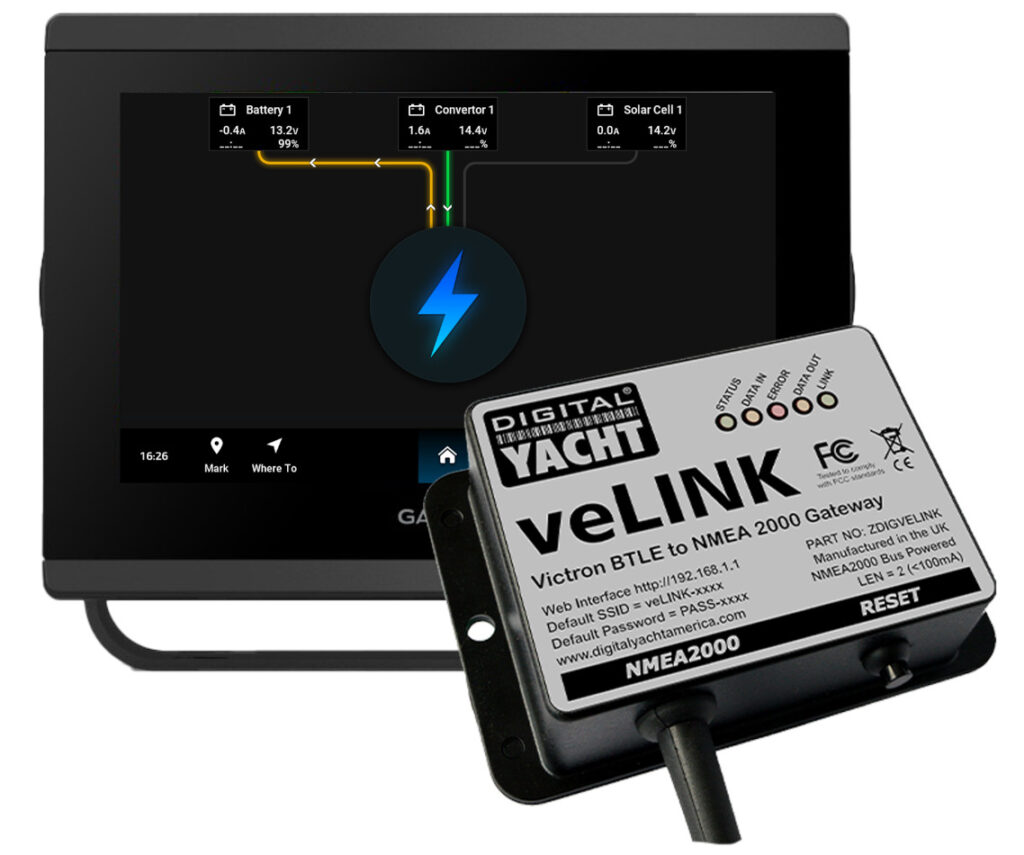
veLink also supports multiple devices (including MPPTs, shunts, BMVs, chargers, and converters) allowing up to eight devices to be connected and monitored within a single system.
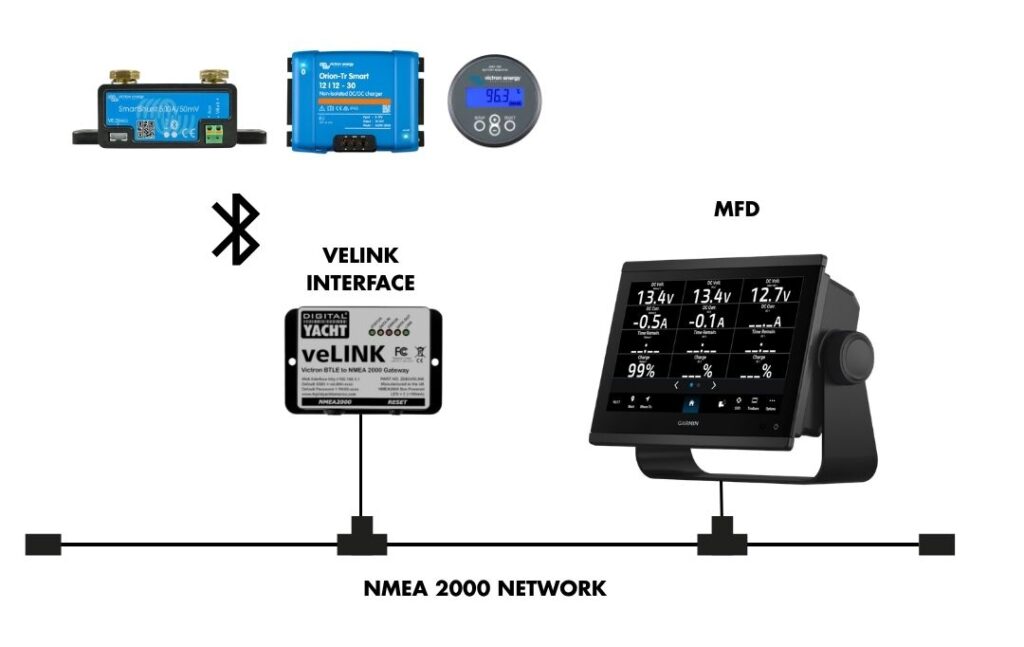
In conclusion, battery monitoring on a boat has evolved from a simple voltmeter into an interconnected and user-friendly system.
As vessels become more electrified and complex, effective battery monitoring is essential for safety, efficiency and boat maintenance. Digital Yacht solutions help boaters better understand and manage energy on the boat, delivering a user-friendly and more connected boating experience.
