


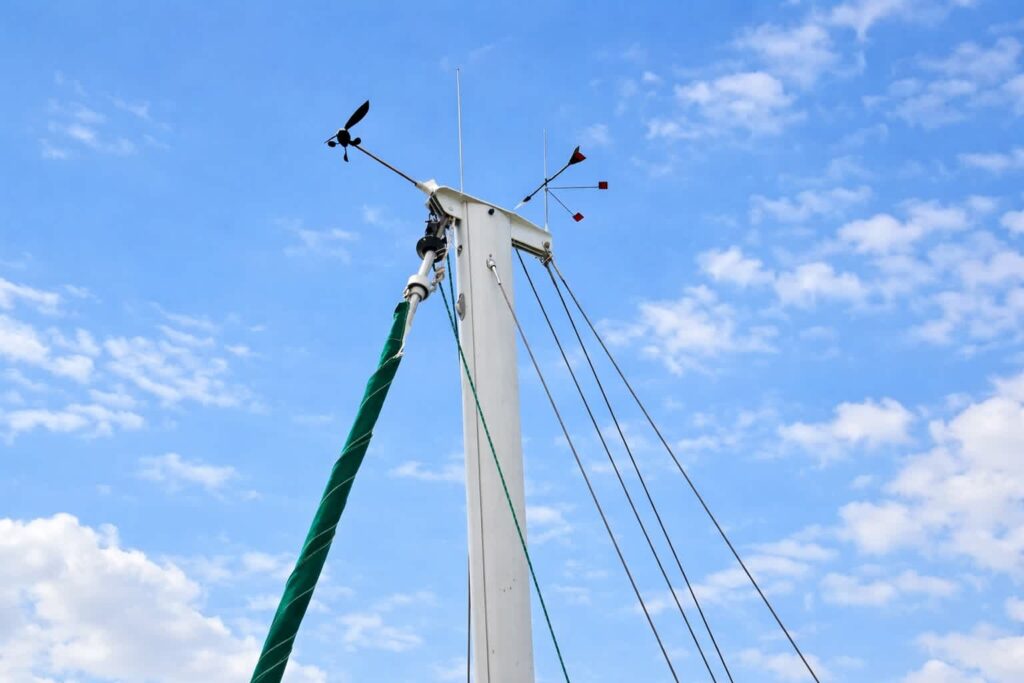
Running cables down a sailboat mast has traditionally been one of the most challenging parts of installing a wind sensor. It often requires unstepping the mast, pulling cables through tight conduits, and dealing with connectors exposed to harsh marine conditions. For many boat owners, this means significant installation time, cost, and complexity—especially when upgrading or retrofitting an existing system.
Wireless technology has finally eliminated this hurdle. Using the Calypso Ultrasonic Wireless Wind Sensor, you can capture precise wind data without a single physical wire. By pairing the sensor via Bluetooth to NavLINK Blue, the signal is converted and fed directly into your NMEA 2000 network, making it available to every multifunction display (MFD) on your boat.
In this article, we’ll explain how to add a wireless wind sensor to your NMEA 2000 network, step by step, and how to get reliable wind data on your onboard displays without running a single cable down the mast.
What you will need
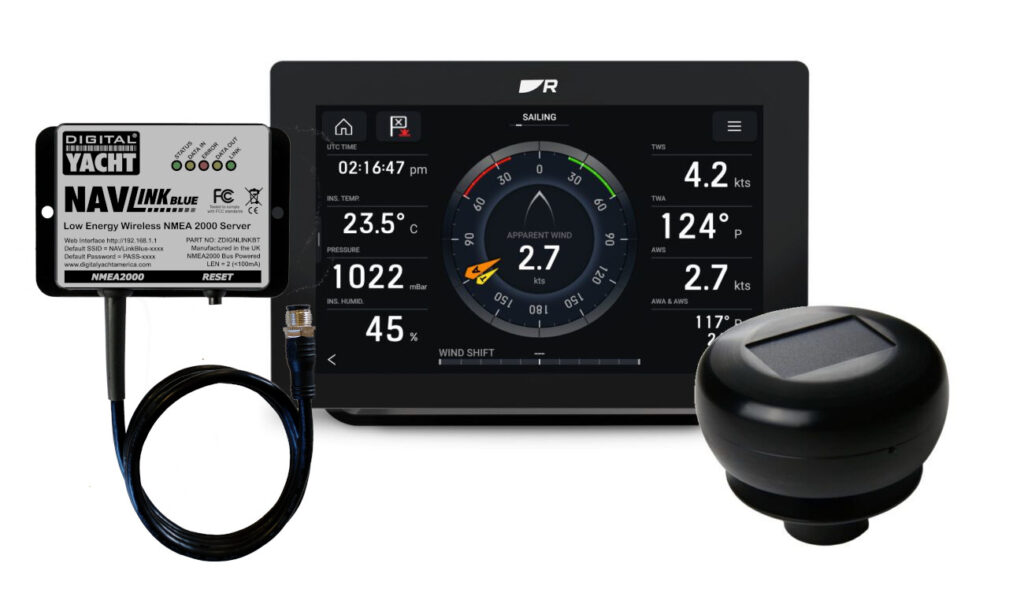
1 – Calypso Wireless Wind Sensor
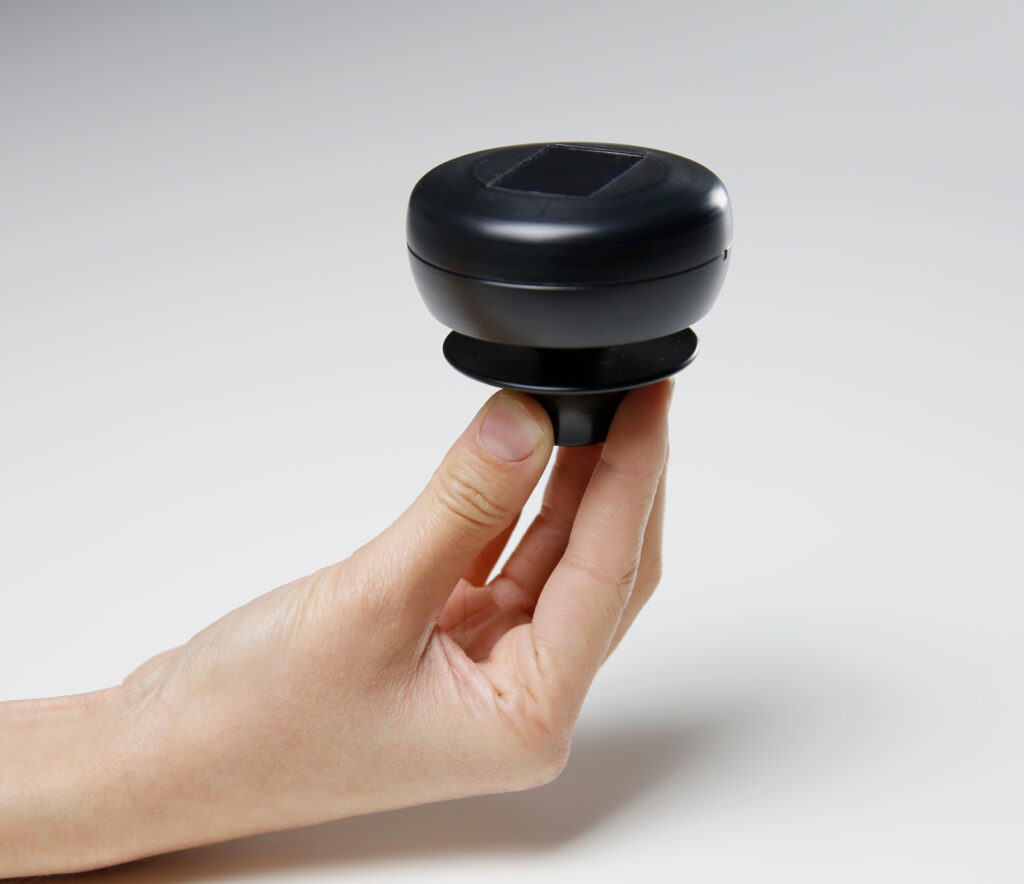
Calypso manufacture ultrasonic wind transducers and have a popular following for their self contained, Bluetooth (wireless) sensor which can sit at the top of the mast and deliver wind speed and angle information to a Calypso app on an iPhone or tablet.
A cable-free installation appeals to lots of boaters and Calypso incorporate a small solar panel on the top of the device to recharge its internal battery so there’s not even a power cable required.
2 – NavLINK Blue
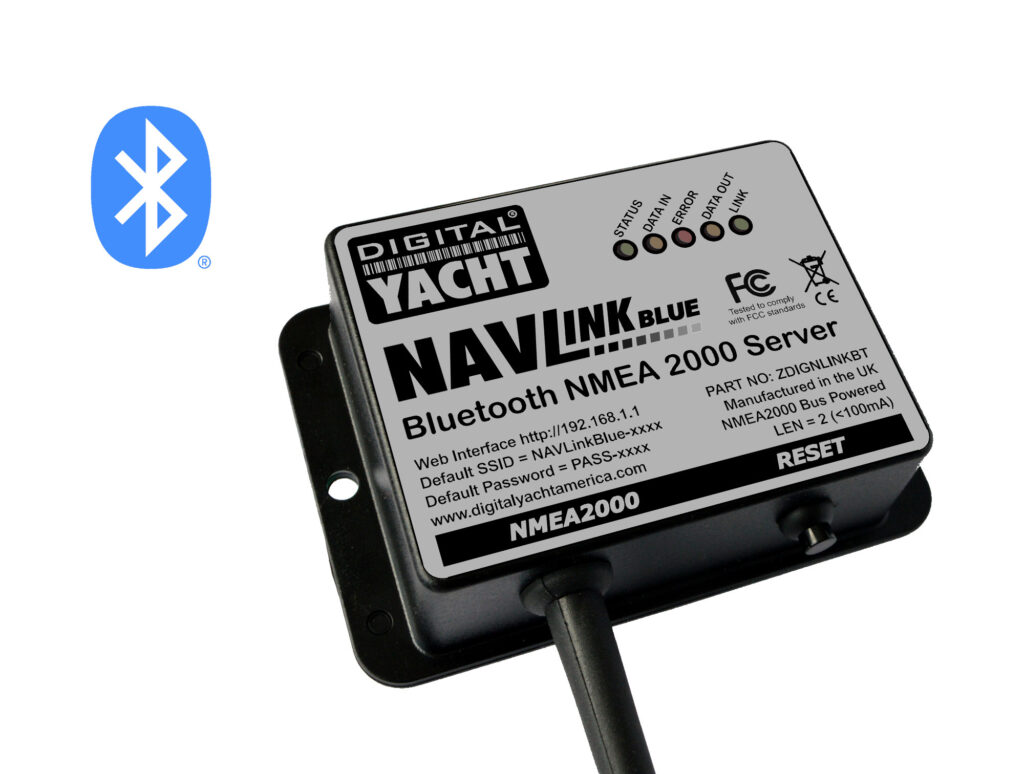
NavLINK Blue is a Bluetooth sensor to NMEA 2000 gateway, designed and manufactured by Digital Yacht. It pairs easily with 3rd party wireless sensors and provides a certified NMEA output of data to the on board network – regardless of brand.
Devices from Raymarine, Garmin, Simrad, B&G, Lowrance, Furuno and Humminbird (and many others) for example can read external NMEA 2000 wind data.
NavLINK Blue is powered directly from the NMEA 2000 network and offers true plug-and-play installation.
3- NMEA 2000 Network & MFD
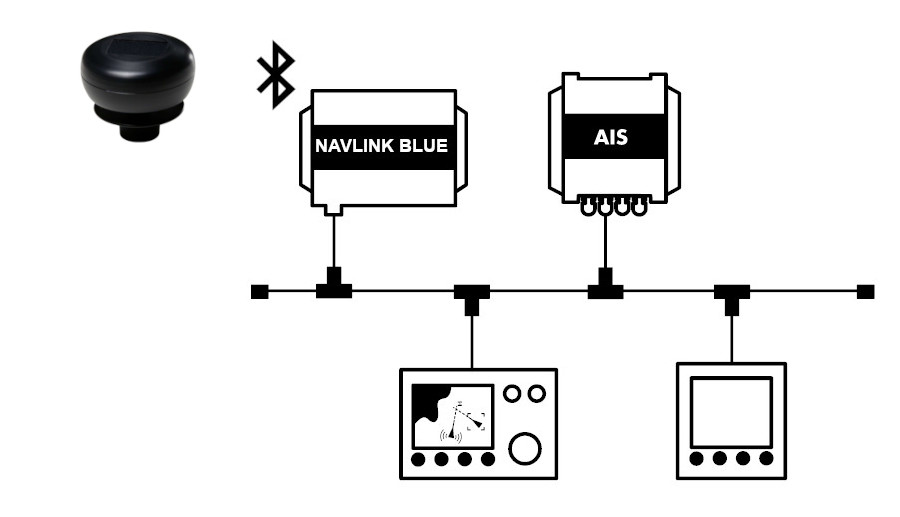
To round out your setup, you’ll need an NMEA 2000 backbone to link your devices and provide power. This allows the Calypso Sensor and Navlink Blue to share data seamlessly with your onboard electronics.
You can then view real-time wind data on any compatible Garmin, Navico, Furuno, Raymarine, etc. MFD/chartplotter connected to the network.
Where to install the wireless wind sensor
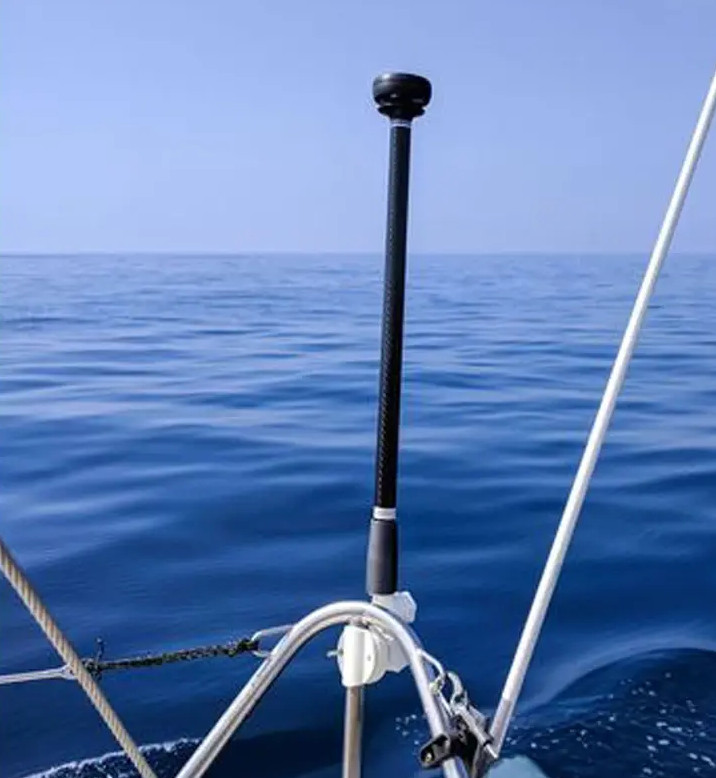
For the best performance, the Calypso Ultrasonic Wireless Wind Sensor should ideally be mounted at the masthead. This position ensures access to “clean,” laminar airflow, providing the most precise wind speed and direction data.
However, since this is a Bluetooth-based device, you need to balance installation height with connectivity. On larger vessels, the distance between the CalypsoUltrasonic Wireless Wind Sensor and the NavLINK Blue may exceed the reliable signal range. If the connection is unstable, consider installing the sensor at a slightly lower mounting point or on a stern pole as a practical alternative.
How to pair with it NavLINK Blue
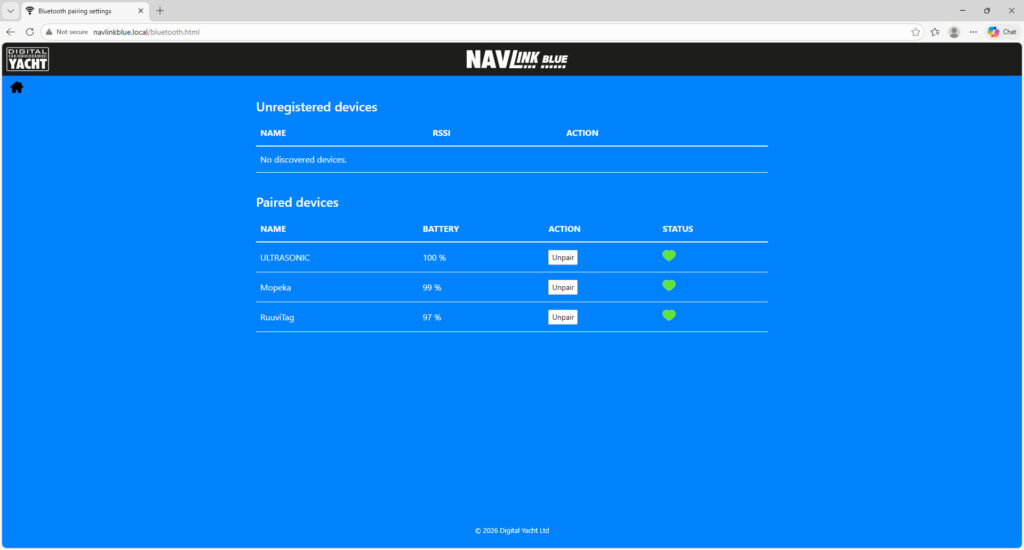
NavLINK Blue features a built-in web interface that can be accessed from a smartphone, tablet, or PC. Through this interface, you can scan for nearby Bluetooth devices and pair up to 16 devices simultaneously.
Once the Calypso Ultrasonic Wireless Wind Sensor is paired via Bluetooth, you can check its status and battery level through the Navlink Blue web interface.
NavLINK Blue can also be used with other compatible Bluetooth sensor devices at the same time. Another popular option is the Ruuvi pressure, temperature and humidity wireless sensor for environmental and weather monitoring.
NavLINK Blue is also compatible with the Ultrasonic Portable Mini wind meter.
Viewing Wind Data on Garmin, Raymarine and Other NMEA 2000 MFDs
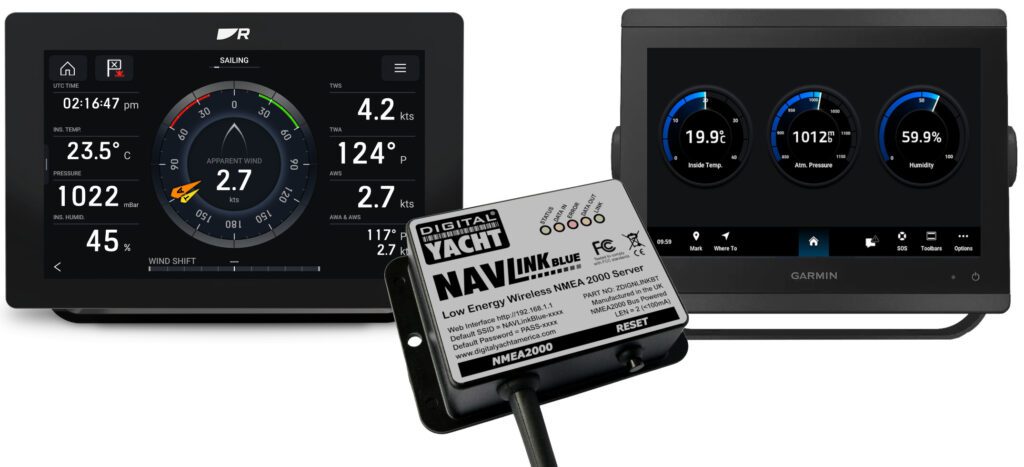
Once the Calyspo wind sensor is securely paired to NavLINK Blue, accurate wind speed and wind angle information will then be available for presentation on the boat’s integrated system.
NavLINK Blue is compatible with any NMEA 2000 MFD and can transmit not only wind data, but also data from any compatible Bluetooth sensors paired with it.
NavLINK Blue makes it easy to add reliable wind data from a wireless sensor to any NMEA 2000 system, simplifying installation while maintaining full compatibility with modern onboard displays.
